
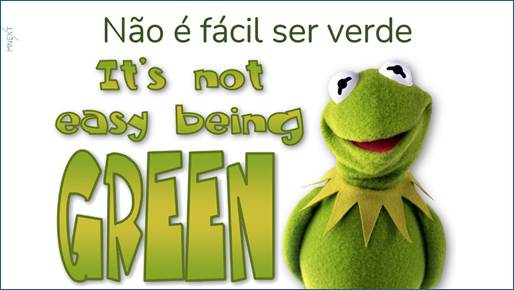
It's not easy being green
You were probably already thinking. Already 5 updates from Jappe from his life in Ouro Preto and he did not once pull Kermit the frog out of a hat. Well, you can sit back and relax. Here he is. This time I will dive a bit deeper into sustainability in Ouro Preto. Because also here it’s not easy being green. It’s a pity I forgot to bring my green frog suit. Maybe a next time. Should make passing customs much easier. But also without my suit I managed to introduce Kermit here. I performed my green challenge TED-talk for the students in my course and discussed Kermit during a lecture for students and professors. And this week to my big surprise during a meeting with one of the research groups at UFOP, Kermit suddenly popped up in their presentation. The virus is spreading……
But enough about Kermit. I was going to tell a bit more about sustainability here in Ouro Preto. But how to begin. I think by mentioning that it’s not just a matter of comparing the situation here with the situation in The Netherlands. That would be a bit to simple. Cultural differences (see last week), economic situation, and the history of Brazil play too big a role for this. So, I will just show / tell / explain some of the things that surprised me, struck me, or really bothered me. For you to guess which category they belong 😊.
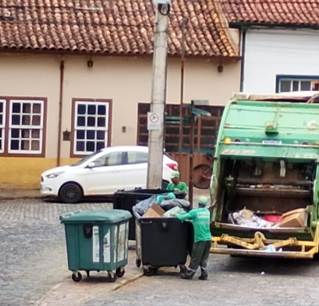
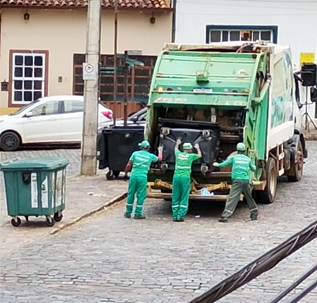
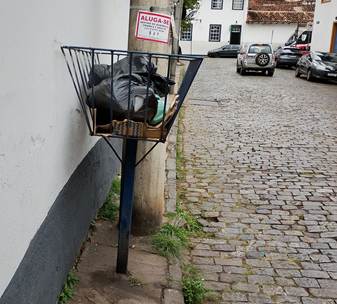
One of the first thing differences that I noticed is the waste management. Back in The Netherlands I have 6 different waste bins. For paper, organic waste, glass, plastic, chemicals/batteries/electrical equipment and one for residual waste. Here I put everything into one waste bin, which I get rid of in a roll container of waste basket. The waste is collected daily from the roll containers and goes to a landfill. I know that in some cities in Brazil at those landfills the garbage is sorted by hand. Not sure if that is the case here in Ouro Preto. I do understand why it is hard to separate the waste because logistically it is much more complicated here. Because there are many small villages that are sometimes not easy to reach. Also. houses do not really have options to have different waste bins. Because of space but also because of the warm weather (smell, insects).
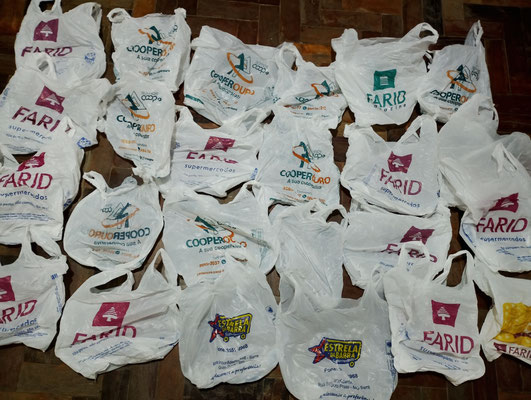
However, I do think there is room for improvement. This could start with a deposit on glass & plastic bottles and cans and having to pay for plastic bags in supermarkets. It would also reduce the amount of litter. The first time I went to the supermarket I was shocked. All things that you buy are packed in small plastic bags often by someone that does the packing. Since the bags are made of very thin layered plastic, for more heavy items 2 or 3 bags are used. So, if you do your week shopping you end up with a big pile of plastic bags. Since the first shopping experience I always bring my backpack + 1-2 linen bags to pack my shopping. Usually, I get some stares, but I do not really care. Last week I saw 2 people also bringing their own shopping bag. Who knows in a few years …. It will need a major change in habit because many people do their shopping on the way home after work, picking up their children or going to the gym. You already need to think about bringing a shopping bag.
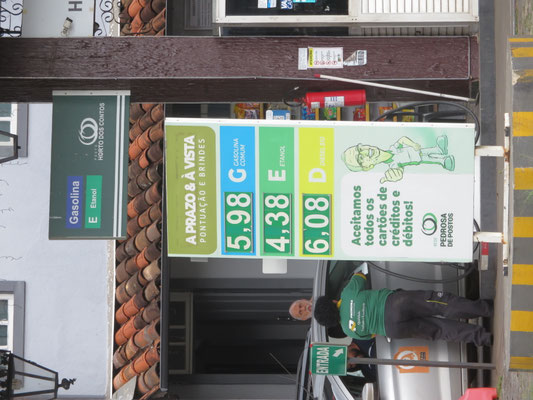
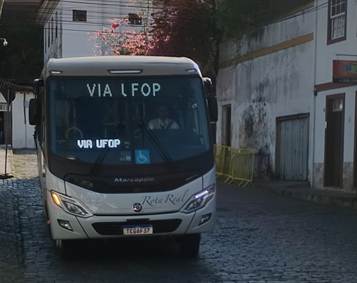
When you look at sustainable transport, Brazil has had a big lead compared to EU. Already for years their main car fuel is bioethanol derived from sugar cane. So nearly no diesel of petrol based on mineral oil. That is probably also one of the reasons that electric cars are not very common here. Even though the CO2 balance of bioethanol is good, this cannot be said from the soot / particulate matter that is emitted by (old) cars and trucks. I think my life expectance (DALY for the experts) has decreased at least a couple of months during the last couple of months. What could be a great improvement concerning transport is more transport by alternatives (boat, train). However, this will not be easy to realize since the infrastructure of Brazil has been completely focused on car and truck. Due to the car industry lobby and the difficult terrain, I was told. Another improved could be the reduction of the number of motorcycles that is being used by restaurants and shops to deliver food and drinks. Many people are used to have their lunch, ice cream or bag of chips delivered to their home.
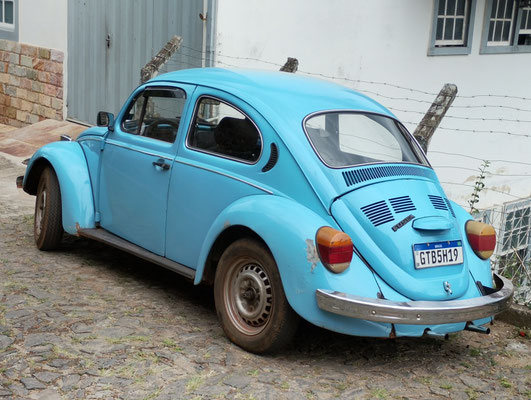
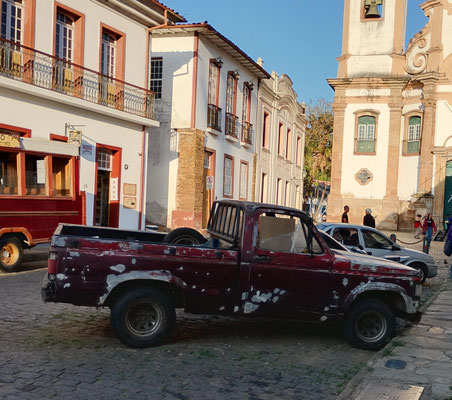
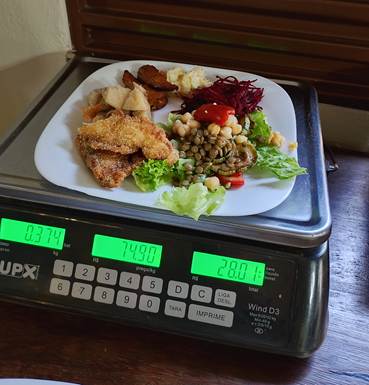
There are also many positive things that I have noticed about being green. Like the use of energy saving light bulbs almost everywhere, no heating of houses (people put on a sweater or coat when it’s a cold day), almost no air conditioning but use of wind funneling to create cooling, and last but not least much less food loss both in supermarkets and in restaurants. The latter has a great deal to do with the fact that you can much more order separate items. If you want more, you order again. And because of the Quilo restaurants. Restaurants where you can pick whatever you want from a buffet, but at the end you weigh your food and pay per weight. Almost no food waste I can tell you. What a big difference with The Netherlands.
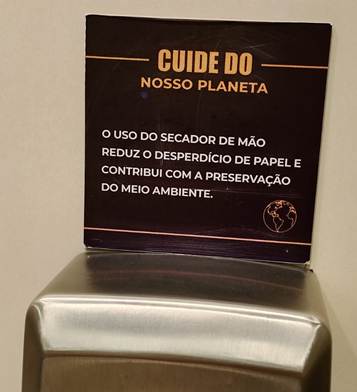

Both here and in The Netherlands a main factor in the realization of more green ways of living are awareness and acceptance. People need to know about (the need for) sustainability and how they can contribute to this. That is why I think communication about what the research that we do at MNEXT is so important. Via presentations, teaching, being present at the DDW, LinkedIn posts etc. I was happy to see that this is also the case at UFOP. Last week I had a meeting with EcoUrb. It is an added Research Group that works at the interface between civil construction and environmental technology. They focus on research, but a big part of their activities is also focused on creating awareness through ecocultural expeditions, educational workshops, and thematic webinars. I hope we can cooperate with them in future.
I will end by saying that I always liked it when I shared the observations, I described above during coffee time, lunch or class with colleagues or students. It led to unexpected explanations, insights, and discussions. It confirmed that it’s not easy being green but that talking about it can lead to change. Several small steps for [a] man, can lead to one giant leap for mankind (I think I heard that expression before …).
My time here at UFOP is coming to an end. Almost time to do some travelling in Brazil and see more of the country. Maybe I find the time to give you one more update but if not, I would already like to say that I had an amazing experience here in Ouro Preto. I would recommend it to everyone. Many thanks to everyone that made this possible. Both here in Ouro Preto and back home in The Netherlands. It’s highly appreciated.
Dare to be green! Ribbit ribbit …..
Ciao, Jappe
PS: want to get a day-do-day short update? Install the Polar steps app on your phone and enjoy: https://www.polarsteps.com/JappedeBest/20745838-professor-visitar?s=09f3c004-aa21-4211-a4e0-c57a5921248a
Write a comment
Martijn (Tuesday, 02 December 2025 14:00)
as always a joy to read!